What Are the 150 Fraud-Related Keywords Behind the Global Fraud Index?
In the modern digital age, fraud is no longer just a series of isolated incidents; it is a global, systemic phenomenon that moves faster than news cycles or police reports. By the time a specific scam reaches the front page of a newspaper, it has typically already peaked, claiming thousands of victims and millions of dollars in losses.
This latency in reporting creates a dangerous “information gap” that scammers exploit. To close this gap, Civoryx was established as the Global Fraud Index. Rather than relying on lagging indicators like police reports or quarterly bank summaries, Civoryx monitors the pulse of the internet itself.
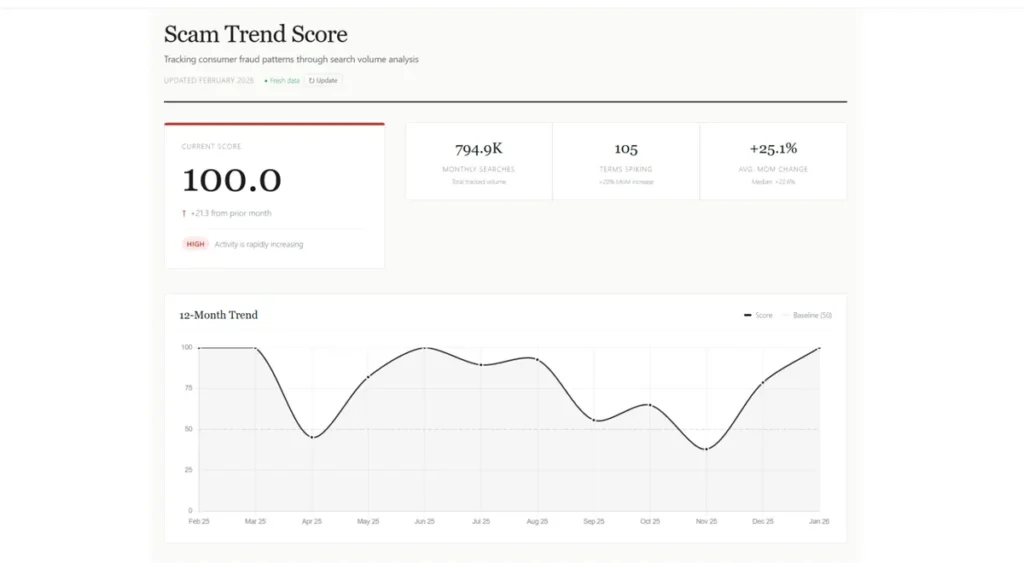
Central to this transparency initiative is the Scam Trend Score, a composite metric powered by a meticulously curated list of 150 fraud-related keywords. This article breaks down those keywords, the methodology behind the score, and why this data is the most reliable signal you have in the fight against global fraud.
Civoryx: The Pulse of Global Fraud Transparency
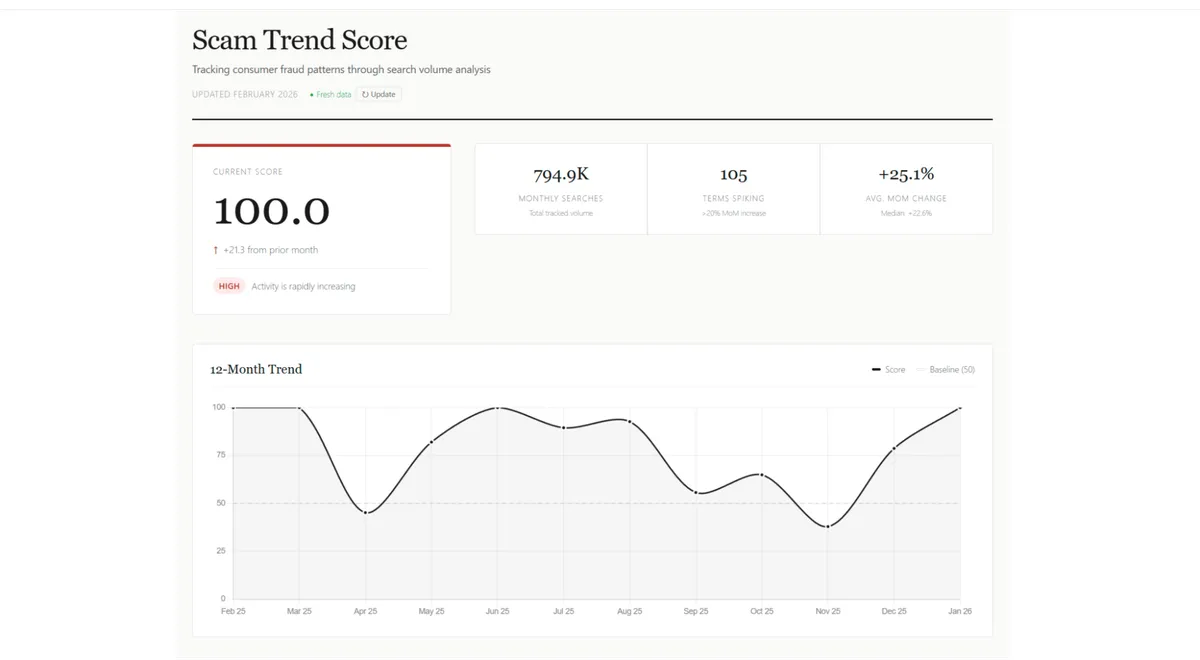
Civoryx exists because fraud evolves at the speed of light. As a public utility, it tracks how fraud attention shifts across the internet in real-time. The mission is simple: No opinions. No speculation. Just data.
Why Does Civoryx Exist?
Historically, researchers, journalists, and businesses have been forced to look backward to understand fraud trends. Civoryx was built to surface these shifts early, giving the world a real-time lens into what people are searching for when they encounter suspicious activity. Whether it is a new “brand” of phishing or a spike in romance scams, the Civoryx Index captures the trend the moment it starts.
How It Works: The Three-Layer Methodology
The Scam Trend Score isn’t a simple tally; it’s a sophisticated, weighted index:
- Monitor: Civoryx continuously tracks search volume for 150 fraud-related keywords spanning phishing, identity theft, crypto scams, and more.
- Measure: They calculate the month-over-month (MoM) change for each keyword. Crucially, these are weighted by absolute search volume—high-volume terms that spike carry more signal than niche terms.
- Score: The weighted changes are aggregated into the Scam Trend Score. A rising score means fraud-related search interest is accelerating globally; a falling score means it’s cooling.
Dual-Layer Normalization of Civoryx
Search data is often “noisy” due to seasonality—for example, tax fraud searches naturally spike every spring. To ensure the Scam Trend Score remains a true reflection of criminal acceleration rather than just the calendar, Civoryx uses a dual-layer normalization model to account for seasonal search fluctuations. This ensures that a routine April increase in tax-related queries doesn’t trigger a false alarm, while an unexpected surge in the same terms in November would be flagged immediately.
The 150 Fraud-Related Keywords
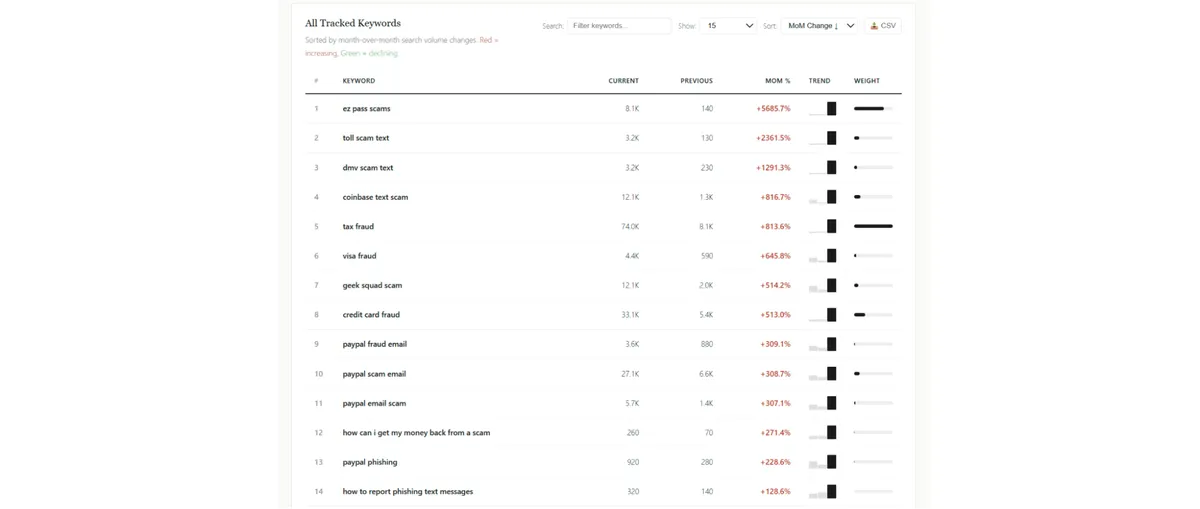
The following keywords form the DNA of the Civoryx Index. Here is every term they track, categorized to show how scammers target different parts of our digital and emotional lives.
Phishing & Digital Communication
These terms track the most common methods of entry for fraudsters—spoofed emails, malicious links, and “smishing” (SMS phishing):
- phishing
- phishing email
- phishing scam
- phishing attack
- phishing link
- phishing text
- email phishing
- email scam
- report phishing
- report phishing email
- apple report phishing email
- how to report phishing on gmail
- how do I report phishing to gmail
- where to report phishing emails
- where can I report phishing emails
- where to forward phishing emails
- where do I forward phishing emails
- how to stop phishing emails
- how can I stop phishing emails
- how do you stop phishing emails
- how to avoid phishing emails
- how to block phishing emails
- how to stop phishing scams
- how to avoid phishing scams
- how to stop phishing attacks
- how to prevent phishing emails
- what to do if you click on a phishing link
- what to do if I clicked on a phishing link
- how to report phishing text messages
P2P Payment & Banking Scams
With the rise of instant transfers, P2P fraud has become a primary focus. These keywords monitor the platforms most frequently targeted:
- zelle scams
- venmo scams
- venmo scam
- cash app scam
- cashapp scam
- paypal scam
- paypal scam email
- paypal email scam
- paypal fraud
- paypal fraud email
- paypal phishing
- how to report a scam on paypal
- chase fraud number
- bank of america fraud
- capital one fraud
- us bank fraud
- credit card fraud
- visa fraud
- how to avoid credit card scams
- apple pay scams
- bank fraud
- fraud alert
- how to place a fraud alert on your credit report
- how to place fraud alerts on credit reports
Brand & Service Impersonation
Scammers leverage the trust of global brands to lower victims’ defenses. These terms track the most common impersonations:
- amazon scam
- can you get scammed on amazon
- geek squad scam
- mcafee scam
- ebay scam
- poshmark scams
- can you get scammed on airbnb
- verizon fraud
- publishers clearing house scams
- toll scam text
- ez pass scams
- DMV scam text
Identity & Government Fraud
These keywords track more traditional, yet high-impact, crimes involving government documents and personal identification:
- identity fraud
- tax fraud
- insurance fraud
- insurance scam
- insurance scams
- mail fraud
- check fraud
- check scam
- wire fraud
- property fraud alert
- marriage fraud
- how do i report marriage fraud to immigration
- medicare fraud
- medicaid fraud
- welfare fraud
- how to report welfare fraud
- how do you report welfare fraud
- report food stamp fraud
- fraud waste and abuse
- fraud waste abuse
Social Engineering & Romance
Focusing on the psychological manipulation of victims, these terms often represent the highest financial losses per victim:
- romance scam
- whatsapp scams
- facebook scam
- facebook marketplace scams
- whatsapp scam
- scam call
- scam calls
- scam phone number
- scam number
- how to report a scam number
- how to block scam likely calls
- how to stop scam callers
- how to get scam calls to stop
- how to stop receiving scam calls
- where to report scam calls
- how can i stop scam calls
- how do you report scams on craigslist
- how do i report a scam to craigslist
- how do i report fraud on craigslist
Emerging Threats: Crypto & Modern Scams
As technology evolves, so do the categories in the Civoryx Index:
- crypto scam
- bitcoin scams
- coinbase text scam
- brushing scam
- computer fraud and abuse
- fraud investigation
- fraud detection
- fraud report
- fraud score
- is this a scam
- how to spot a scam
- how to know if website is a scam
- how do i know if a website is a scam
- how to tell if a job is a scam
Recovery & Reporting
These keywords are “victimization signals.” When volume here rises, it indicates a high rate of successful scams:
- fraud
- scam
- number scam
- text scam
- text message scam
- phone number scam
- gift card scam
- alert scam
- health care fraud
- scam alert
- scam alerts
- how to report a scam
- how to report scam
- how to report fraud
- how to report a company for fraud
- how do i report a fraud company
- where can you report fraud
- report fraud
- report a scam
- report scam
- who do you report scams to
- what to do if you ve been scammed
- what to do if you have been scammed
- what to do if u have been scammed
- what to do if u get scammed
- what do you do if you have been scammed
- how to get your money back from a scam
- how to get your money back from scams
- how do i get my money back from a scam
- how can i get my money back from a scam
- how to stop a scam
The Psychology of the Index: Intent-Based Scoring
What makes the Civoryx index truly powerful is the ability to analyze the intent behind the keywords. Not all 150 terms are equal in terms of what they tell us about the current fraud landscape.
Pre-Victimization Signals (Prevention)
Keywords like “is this a scam” or “how to spot a scam” indicate that the public is seeing a trend but has not yet fallen for it. A spike in these terms suggests a high-visibility, low-success scam campaign is currently active.
Post-Victimization Signals (Impact)
Keywords like “how to get my money back from a scam” or “report identity fraud” are much more serious. High volume in these terms signifies that a scam is not just being seen—it is working. By tracking both, Civoryx provides a complete picture of the “success rate” of global criminal activity.
Who is Civoryx For?
Civoryx is a tool for the collective defense of the internet:
- For Consumers: It’s a way to stay ahead. If you see “Amazon scam” trending on the Civoryx Index, you know to be extra cautious with any Amazon-related emails you receive that week.
- For Journalists: It provides data-backed evidence for stories. Instead of saying “it feels like there are more scams lately,” a reporter can cite the Scam Trend Score.
- For Cybersecurity Professionals: It helps prioritize defense. If the Index shows a 40% MoM increase in “phishing links,” it’s time to update internal training modules.
Conclusion
In 2026, the fraud landscape is more complex than ever. From AI-generated deepfakes to sophisticated synthetic identity theft, the tools available to criminals are evolving. However, our ability to track them is also reaching a turning point.
By monitoring 150 specific keywords, weighting them by volume, and adjusting for seasonality with our dual-layer normalization model, Civoryx provides the single most transparent signal of fraud activity on the planet. You don’t need opinions when you have the data.